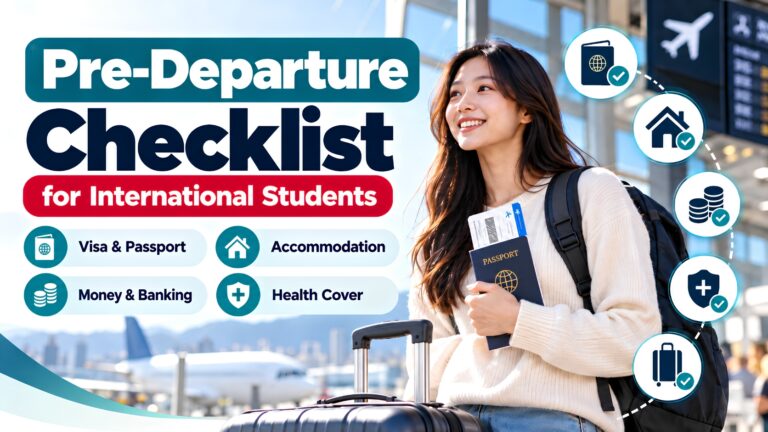
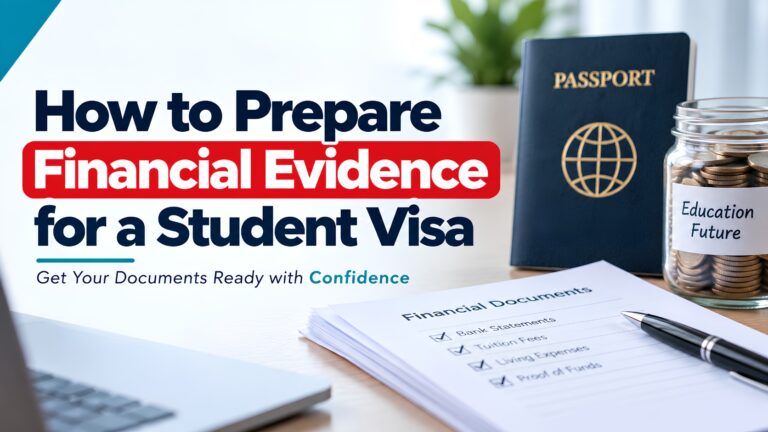
Receiving an offer to study abroad is a major milestone, but university admission and immigration permission are usually separate processes. Before travelling, you may need to prove your identity, admission, finances, language ability and other circumstances to the immigration authority of your destination country.
A well-organised student visa application checklist can help you prepare the right evidence before you submit. However, there is no universal document list. Requirements differ by country, nationality, programme, age and individual circumstances, and immigration rules can change between application cycles.
Always use the official government immigration website for the country where you intend to study.
Key Takeaways
- Confirm the correct student visa or study-permit category before applying.
- Obtain the official admission or enrolment document required for immigration purposes.
- Check exactly how much financial evidence you need and how it must be demonstrated.
- Prepare your passport, academic records and supporting documents early.
- Check whether you need biometrics, medical examinations, insurance or an interview.
- Never assume university admission automatically means your visa will be approved.
- Review the latest official immigration guidance immediately before submission.
Confirm Your Admission and Visa Category
Your first step is establishing which immigration route applies to your studies.
Get the correct enrolment document
Most major study destinations require formal evidence that an approved educational institution has accepted you.
For the UK Student visa, applicants need a Confirmation of Acceptance for Studies (CAS) from their education provider.
Canada normally requires a letter of acceptance from a designated learning institution (DLI). Many applicants also require a provincial or territorial attestation letter, although exemptions apply to certain categories, including some public master’s and doctoral programmes from 2026.
Australia’s Student visa (subclass 500) generally requires a valid Confirmation of Enrolment (CoE) for the intended course.
In the United States, students accepted by a Student and Exchange Visitor Program-approved institution receive Form I-20 before applying for an F or M student visa.
Do not submit until you understand which document applies to your destination.
Prepare Your Student Visa Documents
The exact evidence varies, but several document categories appear frequently.
Identity and travel documents
A valid passport is normally fundamental. Check its validity requirements carefully because some countries require it to remain valid beyond your intended stay.
You may also need recent photographs, previous passports, residence documents or evidence relating to accompanying family members.
Academic and application records
Depending on the immigration system and your circumstances, you may need your:
- admission or enrolment document
- academic transcripts or certificates
- English-language evidence where required
- scholarship or sponsorship confirmation
- previous immigration documents.
For example, a US consular officer may request academic evidence including transcripts, diplomas, degrees, certificates and relevant test scores.
Do not upload documents simply because another applicant used them. Follow the checklist generated for your own visa application.
Prepare Your Proof of Funds Carefully
Financial evidence is one of the most important parts of many student visa applications.
Understand what your money must cover
Governments may expect you to demonstrate that you can pay for some combination of:
- tuition fees
- living costs
- accommodation
- travel
- accompanying family members.
Canada currently requires applicants to demonstrate sufficient resources for tuition, living expenses and transportation without relying on employment in Canada. Applicants studying for longer than one year must also explain how they intend to finance the remaining period.
UK Student visa applicants who are required to provide financial evidence must generally demonstrate course fees plus specified living costs. Where personal or qualifying family funds are used, the required amount normally needs to have been held for 28 consecutive days, with the evidence meeting specific timing rules.
Australia may also require evidence of financial capacity, depending on the applicant and document checklist. The Department of Home Affairs warns that required financial evidence must be attached when requested.
Financial thresholds and acceptable evidence can change. Never rely on an old social-media post or previous year’s figure.
Check Additional Requirements
A student visa application can involve more than documents and bank statements.
Health, biometrics and insurance
Some applicants may need biometrics, medical examinations or specific health documentation.
The UK, for example, may require a tuberculosis test depending on the applicant’s circumstances. Some students may also require an Academic Technology Approval Scheme certificate.
Australia generally requires Student visa holders and accompanying family members to maintain Overseas Student Health Cover (OSHC) unless an exemption applies.
Requirements vary considerably, so check what applies specifically to your nationality and destination.
Prepare for a Visa Interview Where Required
Not every country or applicant follows the same interview process.
For US F and M student visas, applicants generally complete Form DS-160 and attend a visa interview, subject to limited exceptions. Required documents include the passport, DS-160 confirmation, Form I-20 and other applicable evidence. A consular officer may also ask how you intend to pay your educational, living and travel expenses.
If you are invited to an interview, understand your course, university, finances and study plans. Answer truthfully and consistently with the information in your application.
Review Everything Before Submission
A small error can create unnecessary delays.
Before submitting your application, check:
- names and passport details
- course and institution information
- financial figures
- document dates
- translations
- uploaded file quality
- application fees
- biometrics or interview instructions.
Also check whether documents must be originals, certified copies or certified translations.
Australia’s immigration guidance specifically notes that the documents shown by its checklist are an indication and that additional evidence may still be requested.
Do Not Make Irreversible Travel Plans Too Early
Receiving admission does not guarantee immigration approval.
The US Department of State explicitly advises applicants not to make final travel plans or purchase tickets until a visa has been issued.
A sensible approach is to understand the cancellation terms for accommodation, flights and other major expenses before committing significant money.
Conclusion
A reliable student visa application checklist should cover much more than your passport and university offer. You need to understand the correct visa category, financial requirements, immigration documents, health requirements and submission process for your particular destination.
Prepare early, but verify late: immigration rules can change, so compare your documents against the current official government guidance immediately before submitting your application.
FAQs
How much money do I need for a student visa?
There is no universal amount. Financial requirements depend on the destination, tuition fees, course length, location, dependants and current immigration rules. Always check the official immigration authority.
Is a university offer enough to get a student visa?
No. Admission and immigration approval are separate decisions. You must still satisfy the visa or study-permit requirements.
Can my parents provide the funds for my student visa?
Some countries allow qualifying parental funds, but documentation requirements vary. For example, UK rules allow parental money subject to specific evidence and consent requirements.
Should I use an old visa checklist from a previous year?
No. Financial thresholds, document rules and procedures can change. Always use the current official guidance for your application cycle.
Mindship Global Tip
Create a dedicated Visa Application Folder with separate sections for your passport, enrolment document, finances, academic records, health requirements and application confirmations. Before submitting, compare every item directly against the current government checklist rather than relying on information from previous applicants.
Disclaimer
Mindship Global shares verified educational opportunities for informational purposes only. Always verify eligibility, funding, deadlines, required documents and application requirements through the official programme website before applying.