A strong CV should make it easy for someone to understand your experience, skills and suitability for an opportunity. Yet even applicants with good qualifications can weaken their applications through unclear profiles, poor formatting, irrelevant information or claims they cannot support.
Whether you are applying for a job, internship, scholarship, fellowship or international programme, avoiding common CV mistakes can make your application clearer and more credible. The UK National Careers Service recommends tailoring your CV to the opportunity, keeping it easy to read and regularly removing outdated information. Oxford University Careers Service similarly emphasises relevance, evidence and clear presentation.
Key Takeaways
- Tailor your CV rather than sending the same version everywhere.
- Replace generic claims with evidence from your experience.
- Prioritise relevant information instead of trying to include everything.
- Keep formatting consistent, professional and easy to scan.
- Show achievements and contribution, not only responsibilities.
- Check spelling, grammar, dates and contact details carefully.
- Never invent statistics, skills or achievements.
- Adjust your CV structure when applying for academic, professional or international opportunities.
10 CV Mistakes That Can Weaken Your Application
1. Using a Generic Professional Profile
Statements such as “hard-working individual seeking a challenging opportunity” could describe thousands of applicants. They take valuable space without explaining what makes you relevant.
Your opening profile should identify your background, strongest relevant skills and direction. For example, a graduate applying for research roles could mention their academic discipline, research methods and area of interest rather than simply describing themselves as “motivated”.
The National Careers Service recommends using your introduction to summarise who you are and position yourself for the particular opportunity.
2. Sending the Same CV for Every Application
One of the most damaging CV mistakes is treating every opportunity as identical.
A CV for an internship should emphasise different evidence from one prepared for a Master’s programme, research fellowship or graduate job. Review the criteria and move the most relevant experience, skills and achievements into prominent positions.
Oxford specifically advises applicants to target their CV to each position rather than presenting a list of everything they have ever done.
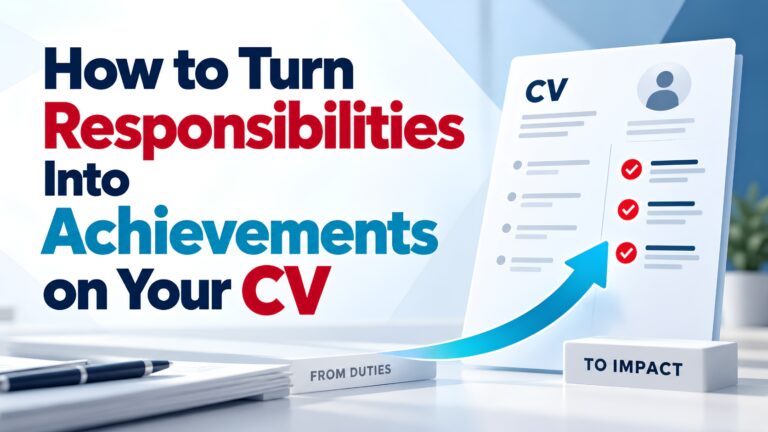
3. Listing Responsibilities Without Showing Contribution
“Responsible for social media”, “helped customers” and “assisted with research” explain duties but reveal very little about your performance.
A stronger statement explains your action and contribution. Instead of “Responsible for student enquiries”, you might write: “Responded to student enquiries and maintained accurate records while supporting admissions and enrolment processes.”
Where reliable figures exist, add them. Oxford recommends demonstrating responsibilities and achievements through clear evidence of contribution and impact.
4. Including Too Much Irrelevant Content
A CV is not your complete autobiography.
An early part-time job may deserve only one or two lines if you now have several years of relevant professional experience. Likewise, unrelated certificates should not crowd out research, leadership, technical skills or achievements that directly support your application.
Ask yourself whether each section helps the reader understand why you fit the opportunity. If it does not, shorten it or remove it.
5. Using Poor or Inconsistent Formatting
Good content can still be difficult to assess when the document feels crowded or inconsistent.
Changing fonts, uneven spacing, very small text, excessive design elements and long blocks of text make a CV harder to scan. The National Careers Service recommends consistent styling, clear headings and readable fonts, while Oxford advises using adequate white space and straightforward formatting.
Professional does not mean complicated. A simple, balanced layout is often more effective than a heavily designed template.
6. Making Unsupported Claims
Writing that you are an “excellent leader”, “expert communicator” or “highly analytical professional” does not prove those qualities.
Show the evidence instead. Rather than claiming strong leadership skills, describe the team you coordinated, project you delivered or improvement you introduced.
Harvard’s career guidance recommends CV language that is specific, fact-based and focused on demonstrating results rather than using broad or decorative claims. Most importantly, never invent percentages, responsibilities, awards or technical skills.
7. Filling the CV With Tasks Instead of Achievements
A job description tells the employer what your role was supposed to involve. Your CV should explain what you accomplished within that role.
Consider the difference between “Organised events” and “Coordinated three student careers events involving external speakers and university staff.”
The second statement gives scale and context. Harvard recommends active, fact-based language and identifies failure to demonstrate results as a common resume weakness.
8. Using Weak or Passive Language
Phrases such as “helped with”, “involved in” and “responsible for” can make your experience less precise.
Where accurate, use direct verbs such as coordinated, developed, analysed, delivered, researched, improved, managed or supported.
Do not select an impressive verb that overstates your role. If you supported a project, writing that you “directed” it would be misleading. Strong CV writing should be confident without becoming exaggerated.
9. Ignoring Spelling, Grammar and Accuracy
A small error can create a poor impression because your CV is also evidence of your attention to detail.
Check organisation names, employment dates, qualification titles, email addresses and links as carefully as you check spelling. The National Careers Service recommends asking someone else to review your CV, while Oxford stresses consistent grammar and spelling throughout the document.
Always review the final PDF rather than assuming the Word version has exported correctly.
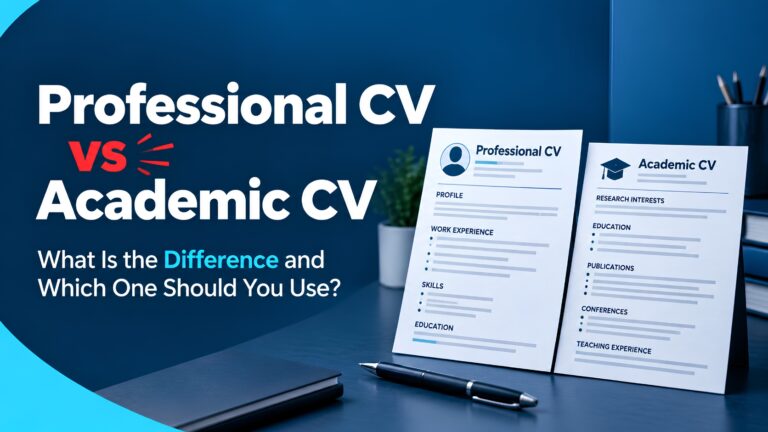
10. Using the Wrong Type of CV for the Opportunity
A professional CV and an academic CV are not interchangeable.
A professional CV normally prioritises relevant work experience, skills and achievements. An academic CV may require greater detail about education, research, publications, presentations, teaching and academic awards. Harvard notes that academic CVs are used for fellowships, grants, research positions and academic appointments and commonly contain these additional sections.
International conventions can also differ, so follow any CV instructions provided by the university, employer, scholarship or programme itself.
Conclusion
Avoiding common CV mistakes is less about creating a perfect document and more about making your evidence easier to understand.
Your CV should answer three questions quickly: What have you done? What did you contribute? Why is that relevant to this opportunity?
Before submitting, remove generic language, irrelevant information and unsupported claims. Check the formatting, strengthen your achievement statements and tailor the document to the specific application.
A concise, accurate and evidence-based CV is usually far more convincing than one filled with impressive-sounding statements that say very little.
FAQs
How long should my CV be?
There is no universal rule. Oxford notes that professional CVs are commonly one or two pages, while academic CVs can be longer because they may include publications, research, teaching and other scholarly activity.
Should I use the same CV for scholarships and jobs?
Usually not. The underlying experience may remain the same, but the emphasis should change according to the selection criteria.
Should I include every certificate I have completed?
No. Prioritise qualifications and certifications that strengthen your application. A long list of unrelated short courses can distract from more important evidence.
Can I use numbers in my CV?
Yes, when they are accurate and meaningful. Numbers can show scale, such as the number of people supported, projects completed or events organised. Never invent figures simply to make your experience sound stronger.
Should a student CV include volunteering and university projects?
Yes, particularly when professional experience is limited. The National Careers Service notes that projects, work experience and volunteering can demonstrate relevant skills for applicants with shorter employment histories.
Mindship Global Tip
Before submitting your CV, read every sentence and ask: “Does this tell the reader something specific and relevant about me?” If the answer is no, rewrite it or remove it.
Disclaimer
Mindship Global shares verified educational opportunities for informational purposes only. Always verify eligibility, funding, deadlines, required documents and application requirements through the official programme website before applying.