A Statement of Purpose (SOP) explains the direction behind your academic and professional journey. Your grades, CV and references show what you have done; your SOP should explain why you are applying, what has prepared you for the programme and what you hope to do next.
A strong Statement of Purpose should be specific, evidence-based and tailored. There is no single SOP format. Universities may ask different questions, set different word limits or emphasise research, career goals or programme fit. Stanford, for example, asks applicants to discuss their preparation, research interests and future plans, while Oxford stresses that requirements can vary significantly between courses.
Key Takeaways
- Read the programme’s exact SOP instructions before writing.
- Connect your academic background and experience to your future goals.
- Explain why the specific programme fits your plans.
- Use concrete examples rather than broad claims.
- Avoid repeating your CV or sending the same generic SOP everywhere.
- Respect the stated word count and formatting requirements.
What Is a Statement of Purpose?
Purpose of an SOP
A Statement of Purpose is generally an academic and professional statement explaining your motivation for further study, preparation for the field, interests and future direction.
UC Berkeley asks graduate applicants to discuss their aptitude and motivation, preparation, academic plans or research interests, career goals and why the programme would be a good intellectual fit.
Your SOP should therefore build a clear argument: this is what interests me, this is how I have prepared, this is what I want to develop next, and this is why this programme makes sense.
SOP vs personal statement
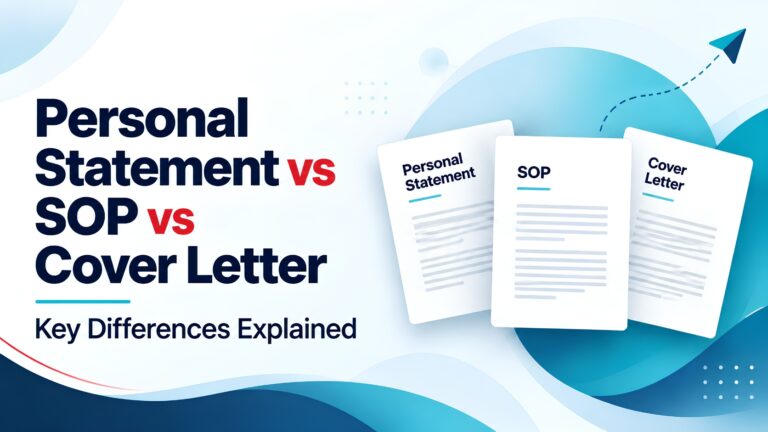
The terms are not always used in the same way. Oxford explains that a statement of purpose is likely to focus primarily on research interests, academic background, career objectives and reasons for applying. A personal statement may place greater emphasis on personal motivations, experiences and values.
Always follow the wording and instructions used by the institution.
What to Include in a Statement of Purpose (SOP)
Your academic direction and motivation
Begin with a focused explanation of what you want to study, research or develop and why it matters. Avoid a long autobiography unless a personal experience directly explains your current goals.
Your opening should give the admissions reader a clear sense of your direction rather than relying on a dramatic story or generic statement about being passionate about the subject.
Relevant preparation
Show how your previous experience has prepared you. Depending on the programme, this could include:
- Relevant modules or academic projects
- Research or a dissertation
- Internships or professional experience
- Laboratory or technical work
- Publications or presentations
- Skills relevant to your intended field
Berkeley recommends discussing research responsibilities, outcomes, important academic work and relevant professional experience. MIT’s guidance similarly encourages applicants to use concrete evidence of skills, experiences and accomplishments.
Your research or study interests
For research-focused Master’s and PhD applications, explain the themes, questions or problems you want to explore.
You do not automatically need a complete research proposal unless the programme specifically requests one. Your goal is to show that you have thought seriously about the field and have a meaningful academic direction.
Why this programme
A good SOP should explain why this particular programme fits your plans.
You might refer to relevant:
- Faculty expertise
- Research groups
- Modules
- Academic methods
- Laboratories or facilities
- Areas of specialisation
Only mention features that genuinely connect with your interests. Generic praise such as saying a university is “prestigious” does not explain academic fit.
Your future goals
Explain what you hope to do after completing the programme and how the course supports that direction.
Your career plans do not need to be permanently fixed. However, there should be a logical connection between your previous experience, proposed study and future ambitions.
What to Avoid in Your SOP
Repeating your CV
Do not simply list qualifications, jobs and projects that already appear elsewhere in your application.
Instead, explain what you learned, what you contributed and how an important experience influenced your academic or professional direction.
Generic and unsupported claims
Statements such as “I am passionate”, “I am innovative” or “I am hardworking” are stronger when supported by evidence.
Show these qualities through research, projects, responsibilities, achievements or decisions rather than simply claiming them.
Ignoring the programme instructions
General SOP advice should never override official instructions.
Stanford notes that the exact prompt and recommended length may differ depending on the graduate programme selected. Oxford similarly advises applicants to follow the permitted length stated on the relevant course page.
Using one SOP everywhere
You can reuse factual information about your background, but each application should explain why that particular programme is relevant to you.
Changing only the university name is unlikely to create a convincing programme-specific statement.
Submitting writing that is not genuinely yours
Oxford states that an applicant’s statement of purpose must be their own work and notes that departments may screen statements using plagiarism-detection software.
AI tools can help you organise ideas, review clarity or identify weaknesses, but your experiences, reasoning and final statement should accurately represent you. Always check the institution’s current guidance on AI use.
A Practical SOP Structure
A simple structure can help organise your Statement of Purpose:
- Opening: Your academic or professional direction.
- Preparation: Relevant study, research, projects and experience.
- Current interests: What you want to explore or develop next.
- Programme fit: Why this specific programme supports those interests.
- Future direction: Your academic or career goals.
- Closing: Connect your preparation, programme choice and next step.
Treat this as a framework rather than a universal template. If the institution provides specific questions, follow those instead.
Frequently Asked Questions
How long should an SOP be?
There is no universal length. Stanford’s general graduate guidance currently recommends a maximum of 1,000 words, but it also states that programme-specific instructions may differ.
Always check the current application page before submitting.
Should I mention professors in my SOP?
If the programme encourages applicants to identify potential supervisors or research interests, mentioning relevant academics can demonstrate genuine research fit.
Only mention academics whose work actually connects with your interests.
Can I use the same SOP for several universities?
You can reuse your core academic background and career goals, but each SOP should be adapted to the specific programme, particularly the section explaining academic fit.
Should I explain low grades or academic gaps?
If circumstances materially affected your academic journey, you may briefly provide relevant context where appropriate. Keep the explanation factual and focus on your development and present readiness.
Can AI write my SOP?
AI can support brainstorming, organisation and editing, but institutional policies vary. Your final statement should reflect your own experiences, reasoning and voice, and you should always check the university’s rules.
Conclusion
A strong Statement of Purpose (SOP) clearly connects your previous preparation, current interests, programme choice and future direction.
Before submitting, compare your draft directly with the official prompt. Remove generic material, support important claims with evidence from your own experience, proofread carefully and confirm the programme’s current word limit and requirements.
Mindship Global Tip
Before writing full paragraphs, create four headings: My Goal, My Evidence, Why This Programme, and What Comes Next.
Place your strongest points under each heading first. If an idea does not strengthen one of these four areas, consider leaving it out of your final SOP.
Disclaimer
Mindship Global shares verified educational opportunities for informational purposes only. Always verify eligibility, funding, deadlines, required documents and application requirements through the official programme website before applying.